CTAPP Compliance: What California Law Firms Need to Know About the Client Trust Account Protection Program?
CTAPP compliance means meeting the State Bar of California's annual trust account requirements: reporting your client trust accounts, completing a self-assessment, and certifying that you follow the rules for safekeeping client funds. Behind those annual steps sits something more important: trust account records that are accurate every month.
For California law firms that hold client money, CTAPP has turned good recordkeeping from a best practice into something the State Bar actively checks. This guide explains what the program is, who it applies to, and what records and processes your firm should have in place.
This article is general education, not legal advice. CTAPP rules can change, so always verify current requirements with the State Bar of California. |
|---|
What Is CTAPP?
CTAPP stands for the Client Trust Account Protection Program. It is the State Bar of California's program for overseeing how attorneys handle client trust accounts, including IOLTA accounts.
Why was CTAPP created?
The State Bar developed CTAPP after reviewing past discipline cases tied to the misuse of client funds, including the Thomas Girardi matter. The Board of Trustees approved the program in November 2021, and it launched for the 2023 licensing cycle. According to the State Bar, its goals are education, deterrence, and detection.
In plain English, CTAPP exists to make sure money that belongs to clients is identified, protected, and accounted for. At its core, it is about good client trust accounting. That makes California trust accounting a recurring compliance item, not something attorneys revisit only when a problem appears.
Who Needs to Pay Attention to CTAPP?
Nearly every licensed California attorney has some reporting obligation under the Client Trust Account Protection Program, with very few exceptions. Attorneys who are not responsible for client funds generally report that status. Attorneys who are responsible for a California attorney trust account have more to do.
What are the main CTAPP requirements?
Based on the State Bar's CTAPP annual reporting page, the core annual CTAPP requirements for attorneys handling client funds are:
Register each trust account, both IOLTA and non-IOLTA, with the State Bar each year
Complete a self-assessment of your client trust accounting practices
Certify that you understand and follow Rule 1.15 of the Rules of Professional Conduct
Reporting happens during the annual license renewal period. The State Bar uses a December 31 balance date, based on cleared transactions. For the 2026 cycle, the State Bar listed a reporting deadline of March 30, 2026. Deadlines have changed before, so confirm the current date each year.
Does CTAPP apply to every California attorney?
The reporting step applies broadly, but the detailed requirements depend on whether you are responsible for client funds and how your firm handles reporting. Firms can submit account information for their attorneys through the State Bar's agency billing process. Because individual circumstances vary, check current State Bar of California rules for your situation. In short, CTAPP California reporting reaches almost every licensed attorney.
What about compliance reviews?
In 2025, the State Bar began mandatory compliance reviews of randomly selected attorneys, conducted by CPA firms the State Bar trained. In the pilot that came before it, 83% of the firms that finished had noncompliant trust account journals. That finding is a reminder that the annual form is only the visible part of CTAPP California. The records behind it are what get tested, which is why trust accounting for law firms now deserves monthly attention.
How Does CTAPP Relate to IOLTA Bookkeeping?
Meeting CTAPP is not simply about completing a form. When you certify that you follow Rule 1.15, you are relying on records that show every client's money is accounted for. Those records come from trust account bookkeeping for law firms done correctly, month after month.
The connection shows up in several places:
IOLTA accounts. Most client funds that are nominal in amount or held briefly sit in a pooled IOLTA account. Every one of those accounts must be registered under CTAPP.
Client trust ledgers. A client trust ledger is a running record of one client's money: each deposit, each payment, and the balance after every transaction. Every client with money in trust needs one.
Trust account transaction records. Each deposit and disbursement should be recorded promptly in a journal for the account.
Reconciliations. The bank, the journal, and the client ledgers must be tied together every month.
Supporting documentation. Invoices, settlement statements, and transfer records explain why money moved.
Accurate client balances. At any moment, the firm should be able to say exactly how much it holds for each client.
Good client trust account bookkeeping is what makes the annual self-assessment answerable with confidence.

What Records Should Law Firms Maintain?
California trust accounting standards under Rule 1.15 call for a written ledger for each client, a written journal for each trust account, all bank statements and cancelled checks, and each monthly reconciliation. For every California attorney trust account, a well-organized firm keeps:
Bank statements for every trust account
Deposit records showing the source and client for each deposit
Check records, including cancelled checks
Electronic transfer documentation for wires and ACH payments
Client trust ledgers for every client or matter
Trust account journals
Monthly reconciliation reports
Records supporting each transfer of earned fees, such as invoices and client notices
How long should these records be kept?
Rule 1.15 requires trust account records to be preserved for no less than five years after final appropriate distribution of the funds. Verify this against the current rule, especially if your firm also practices in other states with different requirements.
What Is a 3-Way Trust Account Reconciliation?
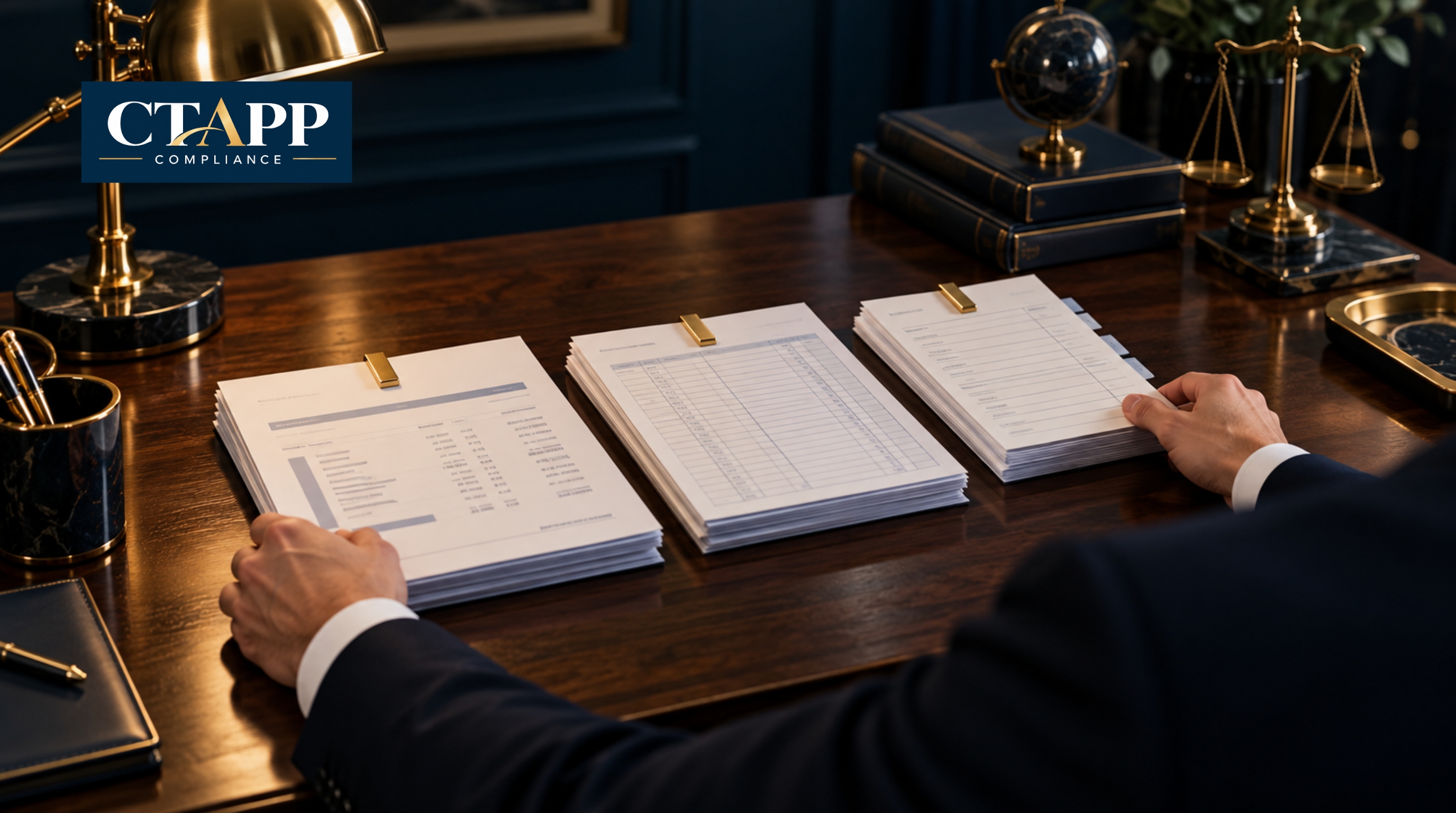
IOLTA reconciliation is done as a 3-way reconciliation, which compares three numbers as of the same date:
The adjusted trust bank balance, after deposits in transit and outstanding checks
The trust account bookkeeping balance in your journal or accounting system
The total of all individual client trust ledger balances
All three should match exactly. A two-way check between the bank and the books can look fine while individual clients are out of balance, which is why the third comparison matters.
How often should California law firms reconcile their trust accounts?
Monthly. California trust accounting standards require a monthly reconciliation of the client ledgers, the account journal, and the bank statements. Monthly IOLTA reconciliation also keeps any difference small enough to trace quickly.
What if the bank balance does not match the client ledgers?
Investigate promptly. Common causes include a deposit never posted to a client ledger, a payment charged to the wrong client, an outstanding check, or a bank fee. Correct each difference with a documented entry, never a plug. The longer a discrepancy sits, the harder it becomes to explain. For the full process, see How to Reconcile an IOLTA Account: A Step-by-Step Guide for Law Firms

What Are Common CTAPP Bookkeeping Problems?
Most problems in trust account bookkeeping for law firms are not dishonesty. They are recordkeeping that fell behind. The issues we see most often in law firm bookkeeping include:
Books several months behind
Missing client ledgers, with only an account total
Negative client balances, meaning one client's money covered another's payment
Old, unexplained trust balances on closed matters
Bank balance not matching the bookkeeping records
Client ledgers not matching the trust account total
Misclassified transactions, such as client deposits recorded as income
Earned fees not transferred correctly, too early, too late, or without documentation
Trust and operating funds mixed together
IOLTA reconciliation not completed consistently
Any one of these can make the CTAPP self-assessment hard to answer honestly. Together, they can turn a compliance review into a long and expensive cleanup.

How Does IOLTA Bookkeeping Support CTAPP Compliance?
Consistent bookkeeping does not guarantee compliance, but it gives a firm the accurate records that compliance depends on. Strong trust accounting for law firms includes:
Recording transactions promptly, ideally within days, not at month end
Maintaining client-level balances for every matter
Reviewing unusual transactions, such as large disbursements or transfers between matters
Performing reconciliations every month without exception
Identifying discrepancies while they are still small
Keeping records organized so documents can be produced quickly
Preparing the firm for certification or review with clean, current records
When this routine runs every month, the annual CTAPP certification becomes a confirmation of work already done rather than a scramble.

Can QuickBooks Be Used for CTAPP Bookkeeping?
Yes, QuickBooks can be part of trust account bookkeeping for law firms when it is configured and maintained appropriately. It is not a compliance solution on its own. The setup should include:
Proper account setup, with the trust bank account separate from operating
Separate trust accounts for each trust bank account the firm maintains
Trust liability tracking, so client deposits are recorded as money owed to clients, not income
Client-level tracking for every trust transaction
Reconciliation procedures that tie the bank, books, and client balances together monthly
Ordinary business bookkeeping is not the same as proper client trust accounting. A setup that treats retainers as revenue or tracks only the account total will not produce the client-level records CTAPP depends on. Many firms pair QuickBooks with practice management software for client ledgers. Either way, the key is client-level accuracy and client trust account bookkeeping done by someone who understands the rules.

How Should a Law Firm Prepare for CTAPP?
Use this CTAPP California checklist before each reporting cycle, and ideally review it quarterly:
Confirm every California attorney trust account the firm maintains is identified
Make sure law firm bookkeeping is current through the most recent month
Review every client trust ledger for accuracy
Investigate and correct any negative client balances
Investigate old or unexplained balances
Complete any outstanding monthly reconciliations
Confirm the bank balance agrees with the accounting records and client ledgers
Organize supporting documentation in one place
Correct bookkeeping errors before they compound
Review the current CTAPP requirements and deadline on the State Bar website
What if your trust account records are behind or inaccurate?
Start by catching up the oldest unreconciled month first and working forward, because each month's ending balance is the next month's starting point. Rebuild missing client ledgers from bank records and matter files. Document every correction. If the gaps are large or you cannot explain a balance, bring in a professional before the next reporting cycle rather than after it, and talk with your ethics counsel about any concerns.

When Should a Law Firm Get Professional Help?
Warning signs that it is time:
You do not know whether your IOLTA account balances
Monthly reconciliations have not been completed
Client ledgers are missing
Some trust balances cannot be explained
QuickBooks does not match the bank
Some clients show negative balances
The firm is several months behind
Attorneys are spending billable time fixing law firm bookkeeping problems
The firm is preparing for CTAPP reporting, certification, or a compliance review
CTAPP Compliance focuses only on trust accounting for law firms. We help California firms organize and maintain accurate trust records and client trust account bookkeeping, including monthly 3-way reconciliation, client ledger maintenance, discrepancy alerts, and cleanup of months that have fallen behind. Tammy Hoang teaches trust account recordkeeping to attorneys, speaks at bar association events, and has worked alongside firms through State Bar compliance reviews. Our work supports your firm's own compliance efforts; it does not replace your obligations under the rules.
Learn more in IOLTA Bookkeeping: What Law Firms Need to Know, or explore our IOLTA Bookkeeping Services, Law Firm Bookkeeping Services, and IOLTA Reconciliation Services.
Picture your next CTAPP certification taking minutes, because every month is already reconciled and every client balance is already explained. Let CTAPP Compliance keep your trust records accurate and ready. Book a trust account health check, request a quote, or call 949-482-2790.